
In this latest Mavenblog, Jon Vordermark discusses the essence of project work, its interrelationship with strategy, and how its unique and temporary nature make it an empowering and liberating service for executives and project sponsors.

In this latest piece on project leadership, I am writing primarily for:
- Business executives and project sponsors (customers and clients) looking to invest in project services, and
- Fellow project practitioners (project managers and consultants), who have chosen this exciting and demanding career.
These topics also offer insight into why I founded the company. Some of my points are pretty basic for the every-day project practitioner. But for customers and clients, they can be eye-opening.
Note: I use the term “project leader” more so than “project manager”, primarily to differentiate seasoned project practitioners at the forefront of their careers. It helps distinguish them from commoditized contracting staff. “Project Manager” has become a diluted title in today’s market. The role can sometimes be perceived as administrative, coordinative, or middle management (which is admittedly a pet peeve of mine). In the Mavendog world, “project manager” is positioned as a senior, sometimes executive-level leadership role, providing a specialized skill and service.
1. Project Work as a Tactical Specialty
In order to understand the world of project-based work, we have to perceive project management, at least from a project delivery sense, as a tactical specialty. When we hear the term “tactics”, we think in military terms, not necessarily project management ones. But Army training doctrine describes tactical work in a very project management-like way:

The creative and flexible array of means to accomplish assigned missions, decision-making under conditions of uncertainty when faced with a thinking and adaptive enemy, and understanding the effects of combat on Soldiers.
— Army Doctrine Publication (ADP) 3-90

Tactical work is a complement to strategy work; one cannot exist without the other. Individual projects are essentially tactical objectives, and a project’s project manager is a tactical asset. The project/tactical goal is to break down strategies into component parts, subsets, or initiatives (or “decomposition” in project-speak). A strategy can appear daunting from a 10,000-foot view. What makes it feasible, measurable, and eventually real is this tactical breakdown and gritty execution. There is a reason why military training translates so well to a project management career.
2. A Venture Into The Unknown
Project work is not your typical, predictable, operational exercise. For some projects, it is more art than science.

As project practitioners, we often have to inform (or remind) executives and project sponsors of the formal, Project Management Institute (PMI) definition of a project:
“A temporary endeavor undertaken to create a unique project service or result.”
“Temporary” implies that a project is finite. It must have a clear beginning, middle, and end/result. “Unique” implies change — something an organization pursues that is new. For something to be a project, the service or result you’re striving for must not exist yet.
While the uniqueness makes project work exciting, it also evokes apprehension, whether as a fear of the unknown, or in a fog-of-war sense (where conditions are uncertain). It is common practice for the first status report of a project to be coded as Green [healthy]. But in reality, project should start in a Red [unhealthy] status. There are often too many unknowns in the beginning of a project to state confidently that you’re on schedule, under budget, or are even pursuing the right scope. Our purpose as project leaders is to confront the uncertainty. We plan, recognize assumptions, mitigate risk, and drive forward. Once we have a better view through the fog, we can start reporting a Green [healthy] status.
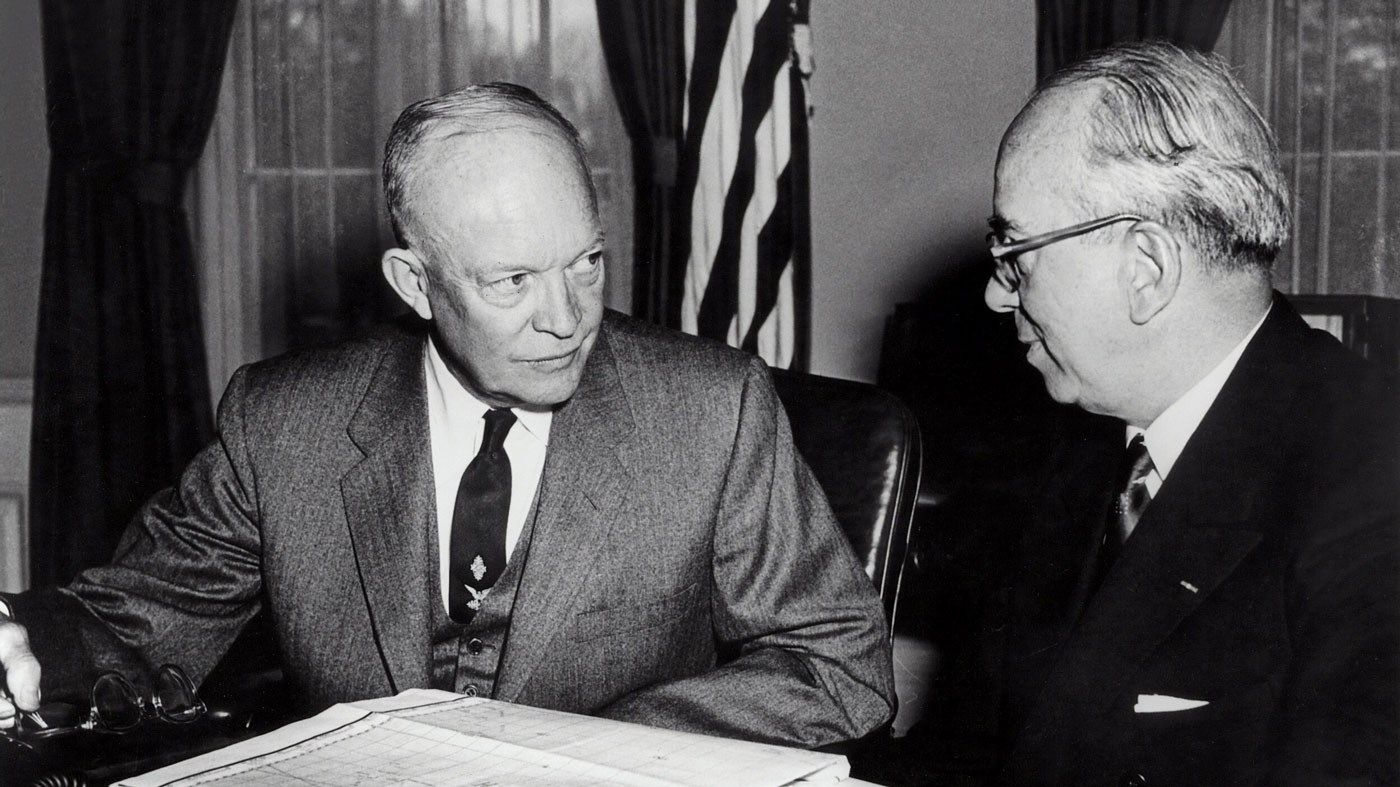
As Dwight D. Eisenhower is credited saying: “Plans are worthless, but planning is everything.” He truly was an exceptional project leader in his own right, who understood that all projects are and will always be a venture into the unknown. It is the project leader who has to explain (and convince) an executive that a project pursuit and experience is a well-planned leap of faith.
Plans are worthless, but planning is everything.
— Dwight D. Eisenhower
3. A Nontraditional, Liberating Service
In a sense, all organizations have no choice but to “projectize” their world. Project work is inevitable, especially if a business is to survive, let alone compete and differentiate itself in the market. An organization’s project/tactical assets are its motive power to “see the hill and take the hill.”

But as demanding as project work can be, good, experienced, life-long project specialists should be an enabling and liberating asset for clients:
- Project work is supposed to end. Again, a project is temporary” If it isn’t, then the organization’s endeavor is a) an operational exercise; b) is challenged and merits a project health check; or c) hasn’t been broken down enough into something that is finite, achievable, and measurable. As project practitioners, the reason for our existence is to help our clients finish projects, and move on.
- There is a nonconformity to project work. By definition, no two projects are the same. Each must be adaptable to realities on the ground. Work can be phased; segmented into part-time or short-term iterations; scaled up or surged with extra resources (called “crashing”); and redefined or recovered as a client sees fit. Projects are meant to be malleable — whatever it takes to achieve the objective.
- Project delivery specialists are flexible. Because projects are temporary, those who execute them must be able to flex to what an organization, strategy, project, and client truly need. The size and nature of each project doesn’t always fit (or have to fit) into traditional, 9-to-5, full-time norms. Just like a firefighter, police officer, or physician, the project delivery world can be situational, time sensitive, or urgent. It is a work reality that executives should expect of their project specialists. It is also a lifestyle reality that project specialists must embrace at this phase of their careers.